
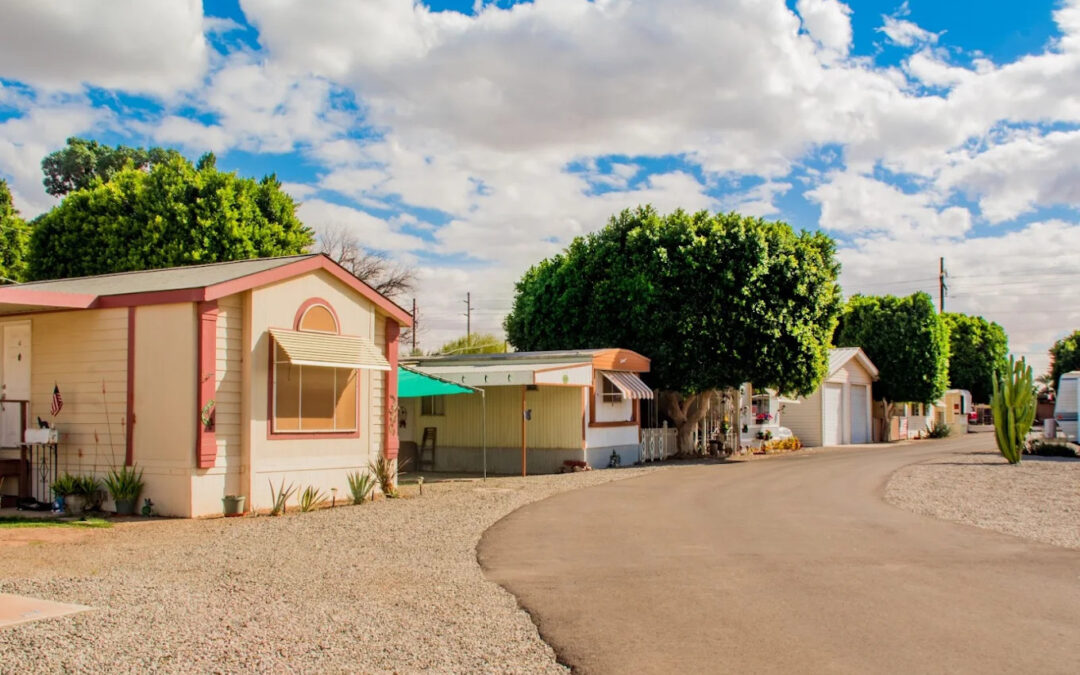
Buying into a mobile home park in Yuma usually means you buy the home and rent the space under it from the park owner. That makes you a homeowner and a tenant at the same time. The park’s monthly space rent, its written rules and its rental agreement become part of what you are buying, so they matter as much as the condition of the home. Some parks also require buyers to be approved before they can move in. Before you sign a rental agreement, Arizona law says the park must give you a written statement of rent increases for the last three full calendar years, and it must give each tenant written notice at least 90 days before any later increase. The history covers basic space rent only, and a park may give it as an average. If your search also showed whole parks listed for investors, that is a business purchase and a different deal. This guide covers buying one home inside a park.
Why the Park Matters as Much as the Home
A mobile home listing can show a small price. Then you learn there is a second bill every month, and it pays for the ground under the home.
That split is the whole idea of buying into a park. The home is yours. The land belongs to the park. What you can change, what you pay each month, and what happens if the owner raises rent or closes the park all follow from that.
You can hire an inspector to look at the home. Nobody inspects the park for you. You have to ask the questions yourself, and the answers sit in places a listing never shows, such as the rental agreement, the park’s policy statement and a few pages of Arizona law.
This guide explains those rules in plain words and gives you questions to ask before you pay a deposit. It covers a mobile or manufactured home that you own on a space that you rent. RV spaces, park models and homes sold together with the land can follow different rules, so ask the park which ones apply to your purchase. This is general information, not legal advice. Parks differ and laws change, so for a specific deal, talk to an Arizona attorney who handles mobile home park law.
Are You Buying a Home in a Park or the Whole Park?
Both turn up when you search for Yuma mobile home parks for sale, and they are very different purchases.
Buying a home in a park means you buy one house and rent one space. Buying a whole park means you buy a business, with every space, every resident’s rental agreement and the job of being the landlord. The park owner is the one who has to give new tenants the written disclosures and rent notices this guide describes.
A whole-park purchase calls for a commercial broker, a business lender and a landlord-tenant lawyer. Everything below is for the person buying one home.
What Do You Own, and What Does the Park Own?
You own the home, as long as the title is in your name. In a space-rent park, the park owns the land under it and the shared areas around it. Each month you pay the park space rent, which some people call lot rent.
That makes you a tenant. Ask for the park’s written rules and read them before you pay for the home. Check what they say about guests, pets and changes to the outside of the home.
Arizona gives you some paperwork up front. Before you enter the rental agreement, the park must give you the owner’s and manager’s names and addresses, the written rent statement, and a free written summary of the state law that covers park tenants.
Read the rent statement with three limits in mind. It covers basic space rent only, so late fees, guest fees and utility charges are not in it. The park may also give it as an average across the park, so one space’s history could differ. And it looks backward. It tells you how the park has behaved, not what it will do next.
Ask two more things the paperwork may not answer. Who owns the park today, and is it for sale? A park about to change hands may run differently afterward.
What Happens Before You Can Move In?
Buying the home and getting into the park are two separate steps. Before you pay a deposit on a home, ask the park whether buyers must apply to live there, what the application asks for, whether there is a fee, and who in your household has to apply. A home the park will not accept is a home you must sell or move somewhere else.
Then read the rental agreement itself. The sale contract covers the home. The rental agreement covers the space, the monthly rent, how long the agreement runs and the park’s rules. Ask for a copy of both before you commit to either one.
Ask what the space rent covers. Are water, sewer and trash included, or does the park bill them on top? Get the answer in writing. Utilities are not part of the rent statement, so a low space rent can still lead to a high monthly total.
Ask for the statement of policy, not just the park rules
Arizona law also calls for a separate document. A park must have a statement of policy that is attached to the rental agreement and covers whether the park is a family community or a community for older persons, how soon a change in use is expected, how rent changes are decided, whether tenants have a right of first refusal if the park is sold, the size and other specifications for homes, any improvements you must provide and their estimated cost, and your duty to insure the home.
Those items touch nearly every worry in this guide. Read the statement next to the rental agreement, then compare both with anything the seller told you. If they disagree, ask the park to explain in writing before you pay.
Finally, ask whether the park has rules about the home’s condition or appearance, and what it would make you fix. Walk the park once on a hot afternoon and once on a quiet morning.
Do All Yuma Mobile Home Parks Work the Same Way?
No, and the difference shows up in the first conversation. Three plain questions sort most of it out.
First, are you renting the space or buying the lot? Ask which one you are being offered, and get the answer in writing. If you are buying the lot, ask how the ownership paperwork will read and whether a monthly association fee applies.
Second, who owns the park? It could be a company, a private owner or the residents. The park has to tell you the owner’s name and address in writing before you sign.
Third, does the park have an age rule? A 55+ park limits who can live in the home. Ask how the rule applies to everyone in your household, including a spouse or partner under 55, before you buy.
Goldwater Estates is one example of a 55+ park in Yuma that lists homes for sale inside the park. Its For Sale and For Rent page has shown furnished mobile homes for sale and for rent, and the listings follow the pattern in this guide. The home has its own price, and a separate monthly space rent applies once you own it. Homes sell and prices change, so call the office to ask what is open right now, what the space rent is today and what it covers.
What Happens to Your Home if the Park Is Sold or Closes?
A park can be sold while you live in it, and an owner can decide the land is worth more as something else. Arizona law covers both cases.
If the park is sold
A sale changes who your landlord is. A new owner must still follow the disclosure and notice rules, so the 90 days’ written notice before a rent increase does not go away. The catch is that a successor landlord does not have to provide average rent figures that relate to the previous owner. Ask when the current owner took over and how rent has moved since. If a sale is pending, ask what the buyer has said about rent and about the land.
Check the statement of policy too. It should say whether tenants have a right of first refusal when the park is sold.
If the park closes or changes use
Parks do close, and owners do redevelop land. When that happens, the owner must give tenants at least 180 days’ written notice of the change in use, and a tenant who has to move can ask the state’s relocation fund to pay the lesser of the actual moving cost or $22,500 for a single-section home or $30,000 for a multisection home. A multisection home is a double-wide or larger. Moving costs include taking the home down, moving it and setting it up again.
Those amounts are caps, not promised payouts, and the law attaches conditions. Statutory amounts can also change, so confirm the current figures before you rely on them.
You can also leave the home in the park. The fund then pays 40 percent of the maximum, which works out to $9,000 for a single-section home or $12,000 for a multisection home. To qualify, you must give the park the title with a notarized endorsement from the owner of record, lien releases for every lien on the title, and proof that all taxes on the home are paid. The owner must also tell tenants in writing about the fund.
Buyers face a special rule. The law says the landlord and the tenants must tell any prospective buyer that a closure is pending. A person who buys a home already in the park after the change-in-use notice has been given is not eligible for compensation under this provision. Do not count on relocation money in that case, and check your situation with an Arizona attorney before you go ahead.
Can a large rent increase or an age-rule change also qualify?
Two other situations have their own relocation rules, and both have narrow tests.
The first is a big rent increase. A tenant who owns a home in a park may qualify when a rent increase takes effect at the end or renewal of the rental agreement and is more than 10 percent plus the current rise in the regional consumer price index, measured alone or combined over 12 months. Increases already written into the rental agreement are not covered, and the tenant must submit a moving contract at least 30 days before the increase takes effect. An increase that merely feels too high does not qualify.
The second matters if you are looking at a 55+ park. When a park changes from age-restricted to all ages, owners of homes in the park can apply for relocation money, and the landlord must give written notice at least 60 days before the change. The payment is the lesser of actual moving costs or $12,500 for a single-section home or $20,000 for a multisection home, and the move must be to another age-restricted community within 100 miles. This is different from a park applying its age rule to you as a new buyer. Each route has deadlines, so read any notice the day it arrives.
Before paying for a home in any park, ask the park in writing whether it has issued a change-in-use notice. If a closure or redevelopment is already pending, learn what that means for a new buyer before you sign. Also ask whether the park is for sale or under contract.
Can You Sell the Home Later?
You can, but the park is part of the sale. A buyer will ask the questions you asked, so ask them now. Must a buyer be approved by the park? Does the park have rules about the age or condition of homes that stay? Does it charge a fee when a home sells? May you post a for-sale sign?
Space rent matters at resale too. A buyer will add it to the monthly cost of owning the home, so expect questions about it. That is another reason to ask for the rent statement before you buy.
Moving the home to another park is the other way out. It takes several steps, and you would need another park willing to take the home. Do not assume you can move it cheaply later.
Pros and Cons of Buying Into a Mobile Home Park
Pros:
- You own the home without having to buy the land under it
- Arizona law sets disclosure and notice rules for park tenants, including a rent statement, 90 days’ notice of rent increases and 180 days’ notice of a change in use
- Some parks sell furnished homes, which suits buyers who do not have a home to move
Cons:
- Space rent is an ongoing cost you do not control
- The land is not yours, so the park’s decisions affect your home
- Park approval and park rules add steps a normal home purchase does not have
- A closure can force a move, and relocation money comes with caps and conditions
Conclusion
Buying into a mobile home park means owning the home and renting the space under it. That is not a bad deal, but it is a different deal from owning a house on your own lot. The home matters, and so does the park.
Before you pay for any home, get the rent statement, the rental agreement, the statement of policy and a written answer on whether the park has given a closure notice or is for sale. Those four items protect you more than any listing photo can. If a smaller 55+ park sounds like a fit, you can call Goldwater Estates at (928) 919-7035 to ask what homes are available and what space rent applies. This guide is general information, so have an Arizona attorney review anything that affects a large purchase.
Frequently Asked Questions
Do I own the land if I buy a mobile home in a Yuma park?
It depends on the park. In a space-rent park, no. The park owns the land and you rent the space. In a community that sells the lot with the home, you may own the land. Ask which one you are buying, and get the answer in writing.
Can I buy a whole mobile home park in Yuma?
You can, but it is a business purchase, not a home purchase. You would become the landlord and take on Arizona’s rules for park owners, including written disclosures to new tenants. Talk to a commercial broker and an Arizona attorney first.
Can a park raise my space rent after I buy a home in it?
Arizona law generally requires at least 90 days’ written notice before a space rent increase takes effect. Notice is one rule among several, so check your rental agreement and the statement of policy for others that apply to you. Ask for the rent statement before you buy so you know how the park has handled rent in the past.
What happens to my home if the park is sold?
The new owner must still follow the disclosure and notice rules, though it does not have to provide rent averages from the previous owner. If the new owner plans a change in use, tenants must get at least 180 days’ written notice. Ask before you buy whether any such notice has been given, because someone who buys a home after the notice is not eligible for compensation under that provision.
What should I ask a park before I buy a home in it?
Ask for the rent statement, the rental agreement and the statement of policy. Ask whether buyers need approval and what it takes. Ask what the space rent covers, who owns the park and whether it is for sale. Then ask whether the park has issued a change-in-use notice or plans to.
Are 55+ mobile home parks different from other parks?
The home itself can be the same. The park adds an age rule that limits who can live there, and the statement of policy should say how the park is classified. Ask how the rule applies to everyone in your household before you buy.
Recent Comments