
Quick Answer
Near an RV park in Yuma you can visit two state historic parks, walk the riverfront and wetlands of the Yuma Crossing area, and watch wildlife at a national wildlife refuge. Hours, fees and seasons change, so check each site’s own page before you drive. Measure the route from your park, because distances depend on where you stay.
What Is There to Do Near an RV Park in Yuma?
Many people who book a long stay in Yuma ask what there is to do once they arrive. The usual answers online are short lists with no hours, no fees and no source. That leaves a traveler guessing which places are open on which days, and a closed gate is a poor way to spend a morning.
The better question is what suits your days. A long stay is not a vacation with every hour planned. It is a few weeks or months, and the places you return to matter more than a single big outing. Yuma offers history, river scenery, wetlands and wildlife, and most of it is outdoors, which suits mild winter weather.
This guide covers the places that official sources describe, and it tells you what each source says about hours and fees on the day it was checked. Hours and fees change, so each section tells you to confirm them with the site before you go. It does not rate attractions or promise a particular experience, and it does not name businesses.
It also does not give drive times. Distances depend on the park you stay at, so measure the route from your own address. If you plan a full day out, check the opening hours first and leave time for the drive back.
Which Historic Sites Can You Visit?
Yuma sits at a river crossing that shaped the region’s history, and two Arizona state historic parks preserve part of it.
What is Yuma Territorial Prison State Historic Park?
The park preserves the ruins of Arizona’s territorial prison on a bluff above the Colorado River. The first seven inmates moved in on July 1, 1876, and the prison operated for 33 years before its inmates were moved to a new facility in Florence, Arizona, because of overcrowding.
Admission is listed at $10 for adults 14 and older and $7 for youth 7 to 13, with children 6 and under free. Fees and hours can change, so confirm them on the park’s page or by phone before you go.
What is Colorado River State Historic Park?
Seasonal hours run from October 1 to May 31, Tuesday through Sunday, with exhibits open 9 a.m. to 4:30 p.m. Summer hours are shorter, so if you stay past May, check for the current schedule. Admission is listed at $10 for adults, $7 for youth 7 to 13 and free for children 6 and under. No holiday closures are listed, so call the park to confirm if you plan to visit on a holiday.
A different page you may see online calls the depot free to enter. Fees change and sources differ, so rely on the park’s own page, and confirm by phone if the answer matters to your budget.
What Can You See in Old Town and Downtown Yuma?
The area around the river crossing is a good place to walk. Yuma Crossing National Heritage Area covers 21 square miles near the California and Mexico borders, and it describes a mix of history, river and open space.
Downtown includes the Yuma Main Street Historic District and the Brinley Avenue Historic District. Many Main Street buildings date from the 1920s, after a 1916 flood, and Madison Avenue has buildings from the 1860s. If you like old buildings, a slow walk along those streets gives you a sense of the town’s layers.
The East Wetlands are described as 1,400 acres set aside as a nature preserve, with a 3-mile hiking trail now open, and the West Wetlands as a 110-acre riverfront park. These are good choices for a morning walk, and they give you a different view of the river than the historic parks do.
Check the city or park pages for current hours, access and conditions before you go, because trails and parks can close for maintenance or weather.
Where Can You Watch Wildlife?
Imperial National Wildlife Refuge is a federal wildlife refuge, so look up the route from your park before you plan the trip. Its visit page lists the refuge’s lands, roads and trails as open daily from dawn to dusk, with dawn and dusk as the best times to see wildlife. It lists two trails, Meers Point at 0.8 miles and Painted Desert at 1.3 miles, both gravel and rated moderate.
The visit page also warns that summer temperatures can be extreme and tells visitors to bring plenty of drinking water. It says overnight camping is not permitted on the refuge.
Wetland wildlife at the refuge is most abundant in winter, when visiting waterfowl arrive, which overlaps with the winter season. The refuge deserves its own planning, including what you may bring and where you may go, so treat this section as an introduction and read the refuge’s current page before you drive.
What Is Worth Doing Across the River or the Border?
Some visitors ask about trips across the river into California or across the border into Mexico. A border trip needs more planning than any other outing in this guide. Before you plan one, read the current U.S. State Department travel advisory for Mexico, confirm what documents you need and check the port’s current hours and your return rules. Do not treat a border crossing as a casual drive.
A cross-border day trip deserves its own guide, so this guide does not recommend one or describe what you will find. If you decide to go, rely on official sources for the advisory, the documents and the rules for returning, and decide for yourself whether the trip is right for you.
What Can You Do for Free or Very Little?
Some of the best options cost little or nothing, though each site sets its own fees, so confirm before you go. The wildlife refuge’s visit page states there is no charge to visit. The state historic parks charge admission, as described above.
Walking is the other low-cost option. The wetlands trail and the historic streets of downtown are places to walk. The sources above do not state fees for walking in those areas, so check with the city or the heritage area if cost matters to you.
A budget plan for a long stay should include a few paid outings and a few free ones. Decide which places you want to see, add the admission fees from each site’s own page and compare the total with what you plan to spend.
How Do Hours and Seasons Change Plans?
Hours change with the season, so check before every trip. The state parks list different hours in summer than in the months from October to May. The refuge page lists its visitor center as open on Friday through Sunday from November 1 to March 31, from 10 a.m. to 4 p.m., and closed for the season from April 1 to October 31.
Those hours came from the sites’ own pages when this guide was written, and a site can change them at any time. The refuge’s lands, roads and trails have their own hours, listed as daily from dawn to dusk, so a closed visitor center does not always mean a closed refuge. Read the page for the exact place you plan to visit.
If you plan to stay past May, build your plans around the summer schedules, because the seasonal hours end and the heat returns. Plan outdoor visits for the cooler parts of the day and carry water.
How Can You Fit History, Walks and Wildlife Into One Week?
A simple way to plan is to match each place to the days it is open. The listed hours give you a few fixed points. Colorado River State Historic Park lists Tuesday through Sunday in the October to May season, so Monday is a poor day to plan a visit there. The wildlife refuge’s visitor center lists Friday through Sunday from November 1 to March 31, so a weekend suits a stop that includes the visitor center. The prison park lists seven days a week in its seasonal hours, so it fits the days that others do not.
Fill the open days with walks. The wetlands trail and the downtown streets do not depend on a visitor center, so they suit a day when the museums are closed. Keep one day for rest, and keep one day free in case the weather or a closure changes your plan.
One way to size the outings, using only the facts above, is as follows. A morning can be a short walk, such as the refuge’s 0.8-mile Meers Point trail or the wetlands trail. A half day can be one state historic park during its listed hours. A full day can pair a historic park with a downtown walk, with a rest and a meal between them. Confirm each place before you go.
You can build a week from three kinds of outing. A history day might include one of the state parks and a walk through downtown. A nature day might include the wetlands trail in the morning and a quiet afternoon. A wildlife day might be a trip to the refuge, planned for dawn or dusk when the refuge’s page says wildlife is easiest to see. Spread them across the week, and do not stack all three on one day.
What should you bring on an outing?
Bring water, sun protection, comfortable shoes and a charged phone. The refuge’s page tells visitors to bring plenty of drinking water and warns that summer temperatures can be extreme, and the same habit makes sense on any outdoor day. Check the weather before you leave, and carry the phone number of the place you are visiting in case you need to confirm hours.
How Do You Plan an Easy Day From Your Park?
Start with a short list of the places you want to see. For each one, look up the address, the current hours, the admission fee and any rules, such as no camping or restrictions on pets. Then measure the drive from your park, at the time of day you plan to leave.
Group places by area. If two sites are close to each other, visit them on the same day. Leave room for a rest and a meal, and do not plan more than two stops on a long day. Carry water, sun protection and a charged phone.
Check the weather before you go, and have a plan for a day when the heat or a closure changes things. Tell someone at your park where you are going and when you expect to be back. A short list and an early start make a day out simpler.
Where Does a 55+ RV and Mobile Home Park Fit In?
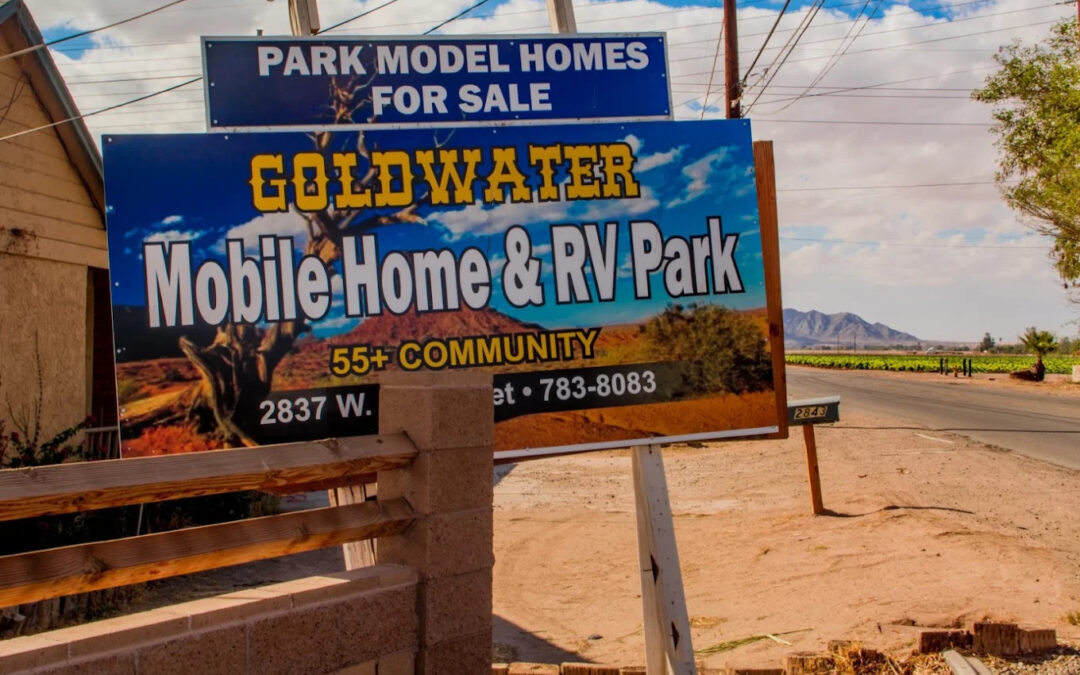
Goldwater Estates is a 55+ RV and mobile home park at 2837 W 1st St on the west side of Yuma. Distances to each place in this guide depend on the route, so measure them from the park’s address when you plan your days.
If a 55+ community appeals to you, call the office to ask about current availability, rates and rules for your dates, and how the age policy applies to everyone traveling with you. Ask for the answers in writing, and ask the staff whether they can tell you about the places residents like to visit.
Pros and Cons of Planning Day Trips From a Park
Plans differ, so treat these as points to check, not facts about every trip.
Potential advantages:
- Official pages let you plan hours and fees ahead
- Many places are outdoors, which suits the winter season
- A park base lets you return to a routine after each outing
Things to check:
- Hours, fees and closures change, so confirm each one
- Drive time depends on the route from your park
- Summer heat limits outdoor plans
- Some outings, such as a border trip, need extra planning
Conclusion
Near a Yuma RV park you can visit two state historic parks, walk the historic streets and wetlands of the Yuma Crossing area and watch wildlife at the national refuge. Each site publishes its own hours and fees, and they change, so check each page before you go.
Pick a few places that match how you like to spend a day, measure the drive from your park and plan around the season. If you would like to ask about a 55+ park in Yuma, you can call Goldwater Estates at (928) 919-7035 to confirm current availability and rules.
Frequently Asked Questions
What are the best things to do near an RV park in Yuma?
The official sources describe two state historic parks, the Yuma Crossing area with its downtown and wetlands and a national wildlife refuge. Which suits you depends on your interests.
Are Yuma’s attractions open in winter?
The state parks list seasonal hours from October 1 to May 31, and the refuge visitor center lists Friday through Sunday hours from November 1 to March 31. Confirm each one before you go.
Is the Yuma Territorial Prison worth visiting?
The state park’s page describes the ruins of Arizona’s territorial prison above the Colorado River, with admission fees listed. Whether it suits you is a personal choice, so read the page and decide.
Is there anything free to do near Yuma?
The wildlife refuge states there is no charge to visit. The state historic parks charge admission, so check each site for current fees.
Can I camp at the wildlife refuge?
No. The refuge’s visit page says overnight camping is not permitted on the refuge.
How far are these places from my RV park?
It depends on where your park is. Look up each address and measure the route from your park at the time of day you plan to travel.
Recent Comments