
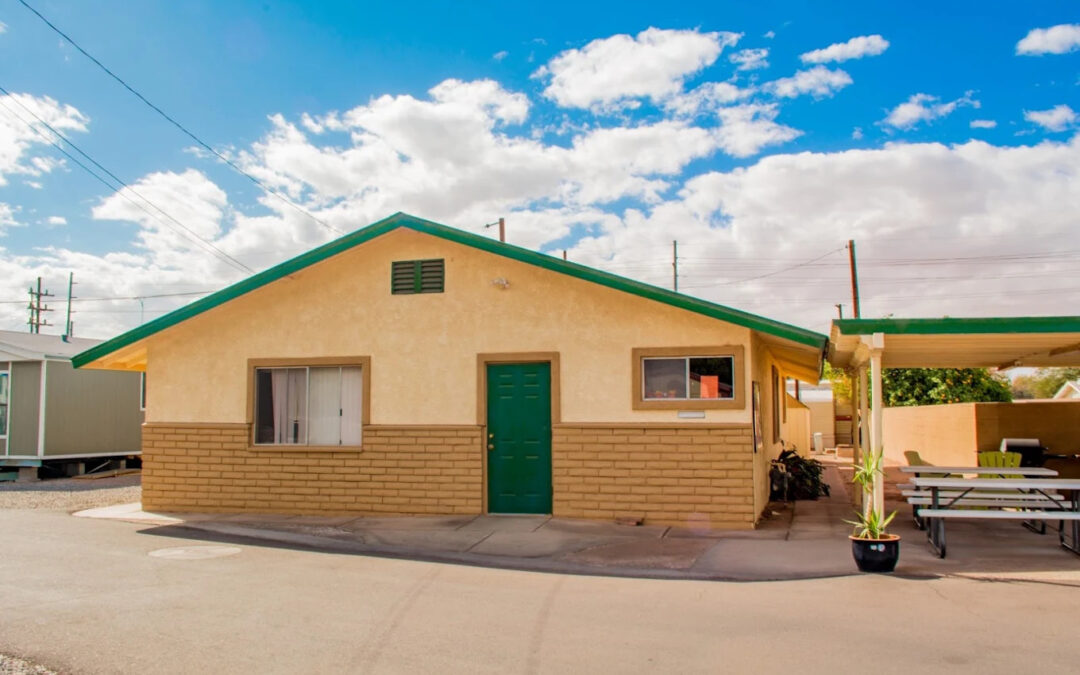
Before you choose a trailer park in Yuma, check the park as closely as the trailer, because the park’s rules, ownership and billing shape what living there costs. A search for trailer park trailers for rent mixes furnished trailers that a park or owner rents out, spaces for a trailer you bring, and travel trailers rented by the night, so decide which one you mean first. Use these five steps to compare any two parks.
- Confirm who owns the park, who runs it day to day, and how to reach them.
- Get the park’s written rules and the rental agreement before you pay or sign.
- Ask what the rent includes and how each utility is billed.
- Ask who the park accepts, including how any age rule applies to your household.
- Visit twice at different times of day, and keep every answer in writing.
Why Is It Hard to Compare Trailer Parks Online?
Type trailer park trailers for rent into a search box and you get a mixed bag. Some results are directories of parks. Some are marketplaces that rent travel trailers by the night. A few are parks that list their own furnished units. Few of them help you decide which park is right for you.
That gap matters, because a unit is easy to judge and a park is not. You can see a kitchen in a photo. You cannot see how the park bills water, who answers the phone when something breaks, or what the rules say about guests and pets.
A poor choice costs real money, and it is hard to undo once you have paid and moved in. This guide gives you plain questions that work at any park, whether you plan to stay a season or longer.
It is general information, not legal advice, so for a specific rental, talk to an Arizona attorney who handles mobile home park law.
What Are You Actually Renting?
The search phrase covers three different deals, and they work in very different ways.
The first is a furnished trailer that sits in a park and is rented to you. The park or a private owner owns the unit. You pay rent for the home and the ground together, and your agreement sets who handles repairs.
The second is a space for your own trailer. You own the home and pay the park for the ground and whatever else the agreement covers. The costs of moving and setting up your home are yours.
The third is a travel trailer rented by the night from a marketplace or a dealer, mostly for trips. That is a vacation rental, so this guide covers only the first two.
“Trailer park” is the everyday name, and Arizona law uses different words. Arizona defines a mobile home park as a parcel with four or more mobile home spaces, and its definition of a mobile home excludes recreational vehicles and certain park model trailers.
Do not assume that one definition controls every rule in this guide, because Arizona uses specific definitions for different laws. Mobile homes, manufactured homes, RVs and park models are treated as different kinds of units, and the label can change which rules apply. Ask the owner or park to identify your unit in writing, and do not rely on a listing title or photo.
What Kinds of Trailers Do Parks Rent Out?
Some rented units are mobile homes or manufactured homes. Some are park models, and some are RVs, such as travel trailers and fifth wheels. A single park can hold more than one kind, so ask the park or owner to name the type and say when the unit was built.
The type matters most for RVs and park models. Arizona’s long-term RV rental law applies to an RV space that the same tenant rents under a rental agreement for more than 180 consecutive days, and to a park model or park trailer that the same tenant rents for more than 180 consecutive days even without a written agreement, but not to mobile homes, manufactured homes or a property with one or two RV rental spaces.
So how long you stay and what you stay in both matter. Count your own days before you decide. A park manager’s answer about which law covers your unit is useful, but it is not a legal ruling, so if you are unsure, ask an Arizona attorney.
How Is a Trailer Park Different From an RV Park or a 55+ Community?
A mobile home park rents spaces for mobile homes, as the Arizona definition above describes. An RV park rents spaces for RVs. A park can be both, and some parks restrict residency by age.
For a rental covered by Arizona’s mobile home park law, you do not have to guess whether a park is meant for families or for older persons. The landlord must give a statement of policy before the rental agreement is signed, and that statement says whether the park is a family community or a community for older persons, how long before any change in the park’s use is expected, how rent changes are determined, whether tenants have a right of first refusal if the park is sold, what size and kind of homes the park allows, what improvements you must make and their estimated cost, and what you must do about insuring your home, and it must be attached to the rental agreement.
If the rental is covered by this law and the park does not provide the required statement, ask for an explanation before signing. If the issue stays unresolved, get advice. That requirement does not automatically apply to every RV park or every furnished trailer rented from a private owner, so the first job is to find out which kind of rental you have.
Local rules can also matter. A park inside the City of Yuma and one in unincorporated Yuma County may answer to different local requirements, so ask which ones apply to the property you are considering.
How Do You Check a Park Before You Rent?
Compare each park using the same notes, so you can see where the costs and rules differ. Write down each answer with the date and the name of the person who gave it.
Who owns the park, and who runs it day to day?
For a rental covered by Arizona’s mobile home park law, the landlord must disclose in writing, before you enter the rental agreement, the name and address of the owner and of the person authorized to manage the premises. Ask for those details and confirm that you know who handles notices, payments and repairs.
Also find out whether the manager lives on site, what the office hours are, and who to call after hours if the water stops or the power goes out.
If you are renting from a private owner inside the park, you have two parties to check. Ask who owns the unit and how to reach that person, and ask the park whether it allows the arrangement.
What do the written rules say?
Read three papers together: the rental agreement, the park’s written rules and the statement of policy. Look for the length of the term, and for the rules on guests, pets, vehicles, noise and quiet hours.
If you plan to bring your own home, check the size and specifications the park allows, whether the home must be new or used, and what improvements the park requires. They can add real cost before the first month of rent.
What do the roads, lighting and shared areas look like?
Walk the park. Look for standing water, drainage problems and visible leaks. Check whether paths, roads and shared spaces look maintained, and whether the common buildings you expect to use are in good shape. If it is safe, look at the lighting after dark.
Ask how repair requests are submitted and how emergencies are handled. Visit once on a hot afternoon and once on a quiet morning or evening, because you see different things at each time.
A walk through the park is a first check, not a professional inspection. It cannot tell you whether a park meets building, plumbing, electrical or health requirements.
How are utilities billed, and are the rates posted?
Ask which utilities the rent includes and which the park bills on top. Find out whether the unit has its own meter or shares one, and ask to see a sample bill. If you rent from a private owner, ask for the last year of bills for that unit so you can see what electric and water costs run in a full year, hot months included.
For a rental covered by Arizona’s mobile home park law, the same statute requires the landlord to post the current utility rates in a conspicuous place unless the utility company bills the tenant directly. It also requires the landlord to give a prospective tenant on an initial rental agreement a written statement of basic space rent increases for the three full calendar years before the agreement. That history tells you how the park has behaved, not what it will do next.
If a park bills you separately for utilities, ask for the rates, the billing method and a sample bill, whatever kind of rental you have.
What does the age rule mean for your household?
Some parks restrict residency by age. If a park calls itself 55+, ask for its written occupancy and guest rules, including how they apply to every person in your household. Ask how it treats visitors, grandchildren on a short stay and a change in your household later.
Do not assume the 55+ label alone answers whether a particular resident or guest is allowed.
How Does the Time of Year Change What You Should Ask?
Yuma has a clear winter season. In a study of the 2017 to 2018 season, RV park winter visitors who stayed 30 days or more in Yuma County most often arrived in October and November and most often left in March and April.
That study is historical and covers RV park visitors, so it does not show what any park offers today. The busy months can still shape the questions you ask.
Ask when the park starts taking winter bookings, whether it sets a minimum stay, and what happens if you want to stay past the end of your term. Ask whether the park is open all year and whether the rent changes in the off season.
Count your days before you sign. If your stay could pass 180 consecutive days, go back to the long-term RV rental law above and confirm which rules apply.
What Red Flags Should Make You Walk Away?
Walk away from a park that will not give you its rules or rental agreement before you pay. Be careful when a promise exists only by phone or text, because anything that matters, such as the rent, the utilities or the move-in date, should be written down.
Before sending a deposit, verify the property, the person offering it and the rental terms. Visit in person when possible. If you cannot, arrange a live video tour and confirm independently that the owner or manager exists and has the authority to rent the unit. Be cautious if someone pressures you to pay immediately.
Watch for visible neglect, such as standing water, debris, dark streets or broken common areas. And ask for an explanation when a rent is far below every other listing you find.
It is easier to turn down a rental before paying a deposit than to fix problems after moving in.
What Does Renting a Trailer in a Park Really Cost?
Use the same worksheet for each park. The table below is an illustration only, and it uses no real prices.
| Cost item | Park A | Park B |
| Monthly rent for the unit or space | Actual quote | Actual quote |
| Utilities not included in the rent | Estimate from past bills | Estimate from past bills |
| Insurance, if required | Actual quote | Actual quote |
| Other recurring charges | Actual quote | Actual quote |
| Deposit | Actual quote | Actual quote |
| Application or other one-time fees | Actual quote | Actual quote |
| Moving and setup, if you bring your own home | Actual quote | Actual quote |
| Minimum stay | Ask | Ask |
| Estimated total for your stay | Add the figures | Add the figures |
Fill in both columns with the same categories. Then total the whole stay, not one month, because a minimum stay changes the math. A cheaper monthly rent with a long minimum can cost more than a higher rent you can leave sooner.
If a park cannot give you a figure, mark it unknown, not zero. If you rent a unit, ask what insurance the owner or park requires from you.
Where Does a 55+ RV and Mobile Home Park Fit In?
Goldwater Estates in Yuma is a 55+ RV and mobile home park. Its For Sale and For Rent page has shown furnished mobile homes for sale and for rent. Homes sell and prices change, so call the office to ask what is open now, what a rental includes and how utilities are billed. Because it is a 55+ park, ask for the written occupancy and guest rules and how they apply to everyone in your household.
Ask the same questions at any park you visit, Goldwater included.
Pros and Cons of Renting a Trailer in a Park
Pros:
- You can try a park before you commit to buying a home
- A furnished unit lets you skip moving and setting up a home
- The park looks after the shared parts of the community that its agreement lists
- Written rules and policy papers give you something to compare across parks
Cons:
- The park’s rules limit guests, pets, vehicles and sometimes who can live there
- Utilities and other charges may sit on top of the listed rent
- Repairs on a unit you do not own depend on your agreement
- Quality varies from park to park, so every park needs its own check
Conclusion
Choosing a rental means checking both the unit and the park. The unit is easy to see and compare. The park shapes how you live, what you pay and how your questions get answered.
Before you decide, find out which kind of rental you have, who owns and runs the park, what the rent includes and how each utility is billed. Total the whole stay, and keep the park’s answers with your paperwork. To ask about current options at Goldwater Estates, you can call the office at (928) 919-7035. This guide is general information, so have an Arizona attorney review anything that affects a large purchase or a long stay.
Frequently Asked Questions
Is a trailer park the same as a mobile home park?
In everyday use, yes. Trailer park is the common name, and Arizona law uses the term mobile home park. The legal definition varies by law, so the label alone does not tell you which rules cover a particular rental.
What does 55+ mean at a trailer park?
It means the park restricts residency by age, but the details differ. Ask for the written occupancy and guest rules and how they apply to everyone in your household.
Who pays for utilities in a trailer park?
The rental agreement decides. Ask which utilities the rent includes and which are billed separately. For a rental covered by Arizona’s mobile home park law, the park must post its current utility rates unless the utility company bills you directly.
Can I rent a trailer in a park for just one month?
Ask the park or the owner. Each sets its own terms, and some may require a minimum stay.
Are Yuma trailer parks only for winter visitors?
Not necessarily. Each park sets its own rental terms, so ask whether it rents all year or only for part of it. The study of the 2017 to 2018 season describes one group of RV park visitors, not every park.
How do I know the person renting me a unit has the right to do it?
Ask for the owner’s name and contact details, then ask the park to confirm who owns the unit and whether it allows the rental. For a rental covered by Arizona’s mobile home park law, the landlord must disclose the owner and manager in writing before you sign. If the answers do not match, pause before you pay.
Recent Comments