
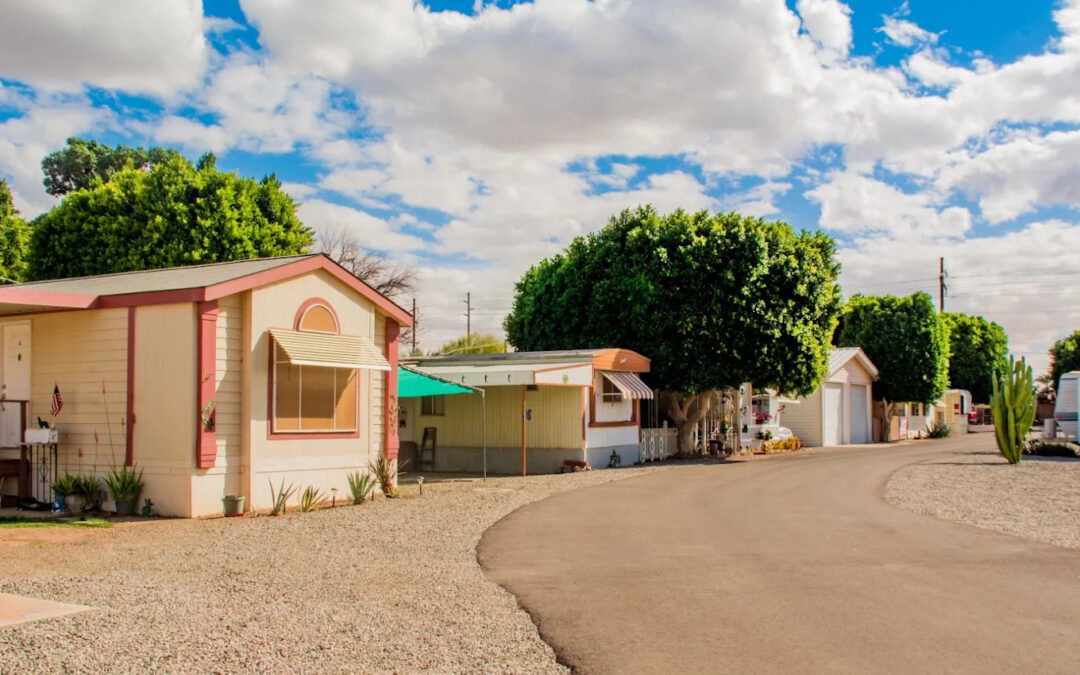
The area people call the Yuma Foothills lies east of central Yuma, and Fortuna Foothills is a related census-designated place whose boundaries should not be treated as identical to it. RV parks in the area vary by exact address, road access, surroundings, rules and price, so what separates one from a park elsewhere in Yuma is mostly where it sits on the map. Before booking, compare the park’s address with the places you plan to visit and confirm the site, rates and rules directly with management.
Why Does “Foothills” Appear in So Many Yuma RV Park Listings?
Some listings use the word “Foothills” without making the location immediately clear. A traveler can end up choosing a park by a name they have not yet placed on a map, and that is easy to avoid once you know what the label points to.
Your location affects everyday travel in ways property photos cannot show. Two parks with similar rates and hookups can still mean different drive times, road exposure and access to services, and those differences show up in your daily routine far more than in a listing.
The labels add to the confusion. Sources use several names for the same general part of the county: the Yuma Foothills, Fortuna Foothills and the Foothills Planning Area. These names overlap, but they do not mark identical boundaries, so a park’s description alone does not tell you its exact location or which local offices cover it.
This guide is for winter visitors planning a first stay and for people considering a longer one. It explains where the Foothills is, how the main names differ and what to check before you pick a park. It does not rank or rate individual parks, because the public sources behind it describe the area, not the parks inside it.
Where Is the Yuma Foothills?
The area lies east of central Yuma. One local visitor guide describes the community east of Yuma, known as the Foothills and formerly as Fortuna Foothills, as largely made up of winter visitors and increasingly home to permanent residents. For the road network, a 2006 planning study placed the Foothills Planning Area directly east of the City of Yuma, with Interstate 8 running through it. That study is about twenty years old, so use it for general geography only. The distance between a particular RV park and the interstate depends on its exact address, so check the route and surroundings before booking.
Yuma Foothills and Fortuna Foothills are related names, but they should not automatically be treated as the same boundaries. Fortuna Foothills is a census-designated place with its own statistics, while planning documents may describe a broader Foothills area. The Fortuna Foothills census-designated place had 27,776 residents in the 2020 census and covers about 40 square miles of land, and it lists 45.3 percent of its residents as 65 or older and 16.6 percent as under 18. Those figures describe that place, not necessarily every area a listing or planning document calls the Foothills.
For an RV traveler, the practical point is simple: distances depend on the exact address. Get the street address from the park and look it up on a map yourself. Then ask whether it sits inside the City of Yuma or in unincorporated Yuma County, and if jurisdiction matters to you, confirm it with the relevant local government office.
Who Stays in the Foothills?
The visitor guide’s description and the age figures above both point to a community with many older and seasonal residents. Neither tells you who stays at a particular RV park. An older population does not mean a given park has mostly seasonal guests, and a community profile cannot show a park’s mix of nightly, monthly and seasonal stays.
If you prefer a quieter, longer-stay setting, ask the park how many sites are usually occupied seasonally or month to month, and how it handles short stays. Neither pattern is better. It depends on what you want from the trip.
Do not assume that an older local population means every park there limits residency by age. Each park sets its own rules, and some restrict residency by age while others do not. Ask for the written occupancy and guest rules before you rely on a label.
How Should You Compare the Foothills With Other Parts of Yuma?
Location matters, but it should be weighed alongside site fit, rules and total cost. The table below is a framework for comparing like with like. It does not claim that every Foothills park has a particular feature.
| What to compare | Park in the Foothills area | Park elsewhere in Yuma |
| Exact location | Confirm the street address and the route to Interstate 8 | Confirm the street address and the route to your regular destinations |
| Errands and appointments | Check the route from the exact site, since distances inside a large area vary | Check the route from the exact site |
| Road exposure | Ask which sites are closest to Interstate 8 and other busy roads | Ask which sites are closest to busy roads |
| Jurisdiction | Ask whether the address is in the City of Yuma or unincorporated Yuma County | Ask the same question |
| Stay style | Confirm the park’s short-stay and long-stay arrangements | Confirm the park’s short-stay and long-stay arrangements |
| Price and rules | Get the quote and written rules for your dates | Get the quote and written rules for your dates |
How far will you drive for what you need?
Check the route from each park to the places you use most, such as your doctor, your pharmacy and the grocery store. If it is practical, drive it at the time of day you expect to travel. A map distance is not a drive time, and a park can look close on a map and feel far in practice.
If you expect a regular trip, such as a weekly appointment, count it across the whole stay. A longer drive adds up in time and fuel over a season.
How exposed is the site to busy roads?
Interstate 8 runs through the wider planning area, so a park’s exposure to highway noise depends on where its sites sit. That is a question about the specific site, not a claim about the whole area. Ask which sites are closest to major roads, and ask about the exact site you would get, not a model site or general property photos.
Look at the surroundings too, such as shade, the layout of the park and what is nearby on foot or by car. A photo shows a site, while a visit shows the access and the condition of shared areas. Visit at different times of day if you can. If you cannot visit, ask for current photos or a short video from the proposed site.
Will your phone and internet work there?
If you work or stay in touch online, test your carrier at the proposed site before booking, if the park allows it. Coverage can differ from one site to another. Ask whether Wi-Fi is offered, whether it costs extra and whether it has limits.
What Should You Ask a Foothills RV Park?
Start with the address and the rules that go with it. Ask for the full street address and whether it sits inside the City of Yuma or in unincorporated Yuma County. Jurisdiction is only one factor, because the type of unit, the intended use, zoning and the applicable rules can also matter.
If you plan to place or move a structure, confirm the property’s jurisdiction and ask the relevant planning or building office which requirements apply to that specific unit and site. Do not assume that the rules for an ordinary RV stay are the same as those for placing a manufactured home or park model.
For a standard stay, the basics apply anywhere. Ask for the full price for your exact dates and what it includes, the deposit and cancellation terms, the minimum stay, and the rules on pets, guests and quiet hours. Ask how utilities are billed too. If electricity, water, sewer or trash cost extra, ask to see a sample bill, because a low rate can cost more once those are added.
Finally, ask about age limits. If a park calls itself 55+, ask for its written occupancy and guest rules, and ask how they apply to everyone traveling with you.
Does the Area Change With the Season?
Yuma has a clear winter season. In a study of the 2017 to 2018 season, RV park winter visitors who stayed 30 days or more in Yuma County most often arrived in October and November and most often left in March and April.
The study covers one past season of RV park visitors across Yuma County, so treat it as history. It cannot tell you what demand or availability looks like at a Foothills park today. Current questions matter more. When does the park start taking winter bookings? Does the rate change by month or season? Is there a minimum stay, and what happens if you stay longer than planned or leave for a few days? Get the answers for your dates in writing.
How Do Long Stays Work Here?
Stays that run past 180 consecutive days can raise extra legal questions in Arizona. Arizona’s Recreational Vehicle Long-Term Rental Space Act generally applies when the same tenant rents an RV space in a recreational vehicle park or mobile home park for more than 180 consecutive days under a rental agreement, and to a park model or park trailer in such a park when the same tenant rents the space for more than 180 consecutive days, whether or not a rental agreement is signed, but not to mobile homes, manufactured homes, factory-built buildings or a property with one or two RV rental spaces.
A stay from December 1 through March 31 lasts about four months, well under 180 days. A stay from October 1 through April 30 lasts more than 180 consecutive days. These examples only illustrate the number of days. They do not establish whether the Act applies to a particular stay, because the answer depends on the unit, the rental arrangement and the facts.
This guide is general information, not legal advice. A park manager’s answer is useful but is not a legal ruling, so if you are unsure, ask an Arizona attorney who handles RV and mobile home park law. Keep a copy of your rental agreement and your payment receipts for the whole stay.
Where Does a 55+ RV and Mobile Home Park Fit In?
Goldwater Estates appears here as an example of comparing locations, not as evidence about the Foothills. Goldwater Estates is a 55+ RV and mobile home park at 2837 W 1st St in the northwest part of Yuma, so it is not in the Foothills. From there, the drive to places east of the city is a different trip from the one a Foothills park offers.
Which side of Yuma suits you depends on your own destinations. If most of your appointments and visits are on the west side, measure the route from a west-side park. If your plans are east of the city, measure the route from a Foothills park instead. The comparison only works when you start from the places you will actually go.
If a 55+ community appeals to you, call the office to ask about current availability, rates and occupancy rules, and how the age rule applies to everyone traveling with you. Ask for the answers in writing, as you would with any park.
Pros and Cons of a Foothills Location
Conditions vary from park to park, so treat these as things to check, not as facts about every site.
Potential advantages:
- Interstate 8 may make arrival simple, depending on the park’s route and entrance
- A location east of the city may suit trips and errands on that side of Yuma
- The area is broad, so parks can differ in surroundings and layout, which gives you room to match one to your preferences
Things to check:
- The area is large, so distances to errands depend on the specific park
- Road noise may affect some sites, depending on how close they are to busy roads
- Names and boundaries differ between sources, so you need the exact address and jurisdiction
- Some parks restrict residency by age, so the written rules need checking
Conclusion
The Yuma Foothills is a broad area east of central Yuma, and the names used for it do not mark identical boundaries. What makes a park there different from one elsewhere in Yuma is its exact location, its road access and what surrounds it. The best way to compare is to put each park’s address on a map and check the route to the places you use.
Get the exact address and jurisdiction, ask about noise, season, price and age rules, and write down every answer before you pay a deposit. If your plans are on the west side of the city, you can call Goldwater Estates at (928) 919-7035 to ask about current options. For any stay that could pass 180 days, have an Arizona attorney review your rental terms.
Frequently Asked Questions
What is the Yuma Foothills?
It is the area east of central Yuma that one local visitor guide calls the Foothills, formerly known as Fortuna Foothills. Planning documents and statistics use related names, such as the Foothills Planning Area and the Fortuna Foothills census-designated place, so ask each park for its exact address.
Is the Foothills in the City of Yuma?
The sources describe it as east of Yuma. Whether a specific park sits inside city limits or in unincorporated Yuma County is something to confirm with the park and, if it matters for permits, with the relevant local office.
Are Foothills RV parks 55+?
Some parks restrict residency by age and others do not. Each park sets its own rules, so ask for the written occupancy and guest rules before you book.
How far is the Foothills from downtown Yuma?
It depends on where the park sits. The Fortuna Foothills census-designated place alone covers about 40 square miles of land, so distances inside it vary. Check the route from the park to the places you use.
Does winter change what I should ask?
Yes. Ask when winter bookings open, whether the rate changes by month or season, and whether there is a minimum stay.
How long can I stay at an RV park?
Each park sets its own maximum stay. If your stay could pass 180 consecutive days, ask which Arizona rules cover your space, and consider asking an Arizona attorney.
Recent Comments