
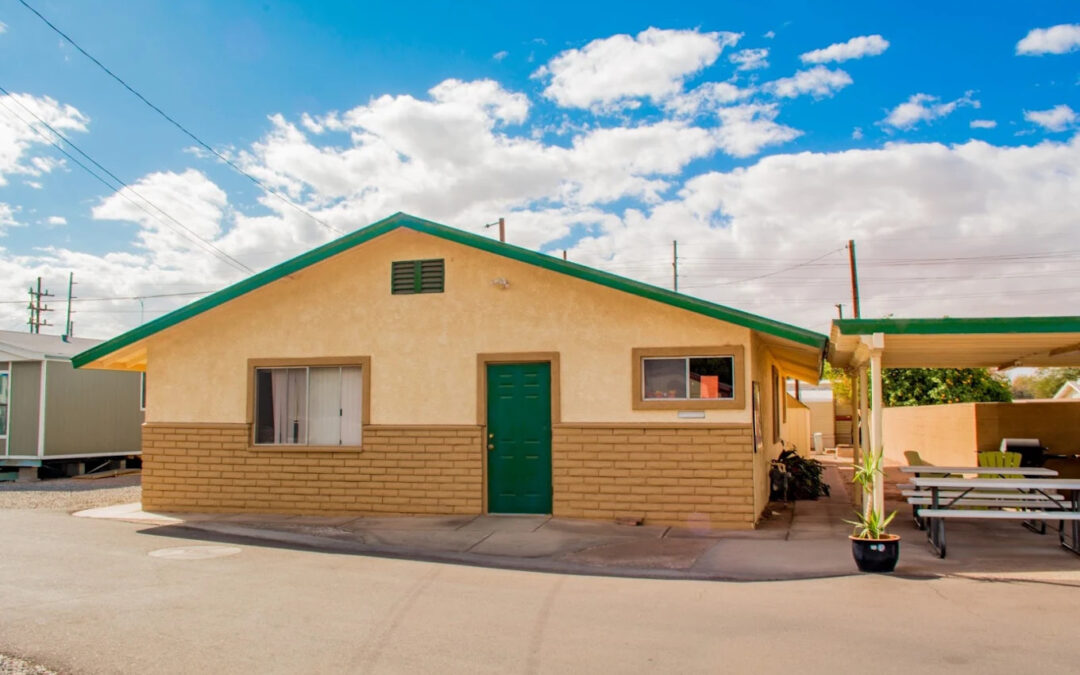
Mobile home space rent is the monthly payment you make to a park owner for the land under your home, plus whatever else your rental agreement says it covers, while you own the home itself and the park owns the space it sits on. The agreement decides what the rent includes, so one park may bundle water, sewer and trash into the rent and the next may bill them separately, and for separately billed gas, water and electricity Arizona law requires a separate meter for each user and caps the charge at the prevailing basic single-family residential rate. Home insurance and the taxes on your home are separate bills, and the rent itself can change when the agreement renews, so ask the park in writing what the rent covers, what it bills on top and how it calculates each bill before you agree to buy, and keep its answers with your purchase papers.
Why Does a Listed Rent Tell You So Little?
A listing says the space rent is a certain amount a month. It does not say what that amount buys.
Two parks can list the same rent and still cost very different amounts. One may include water, sewer and trash. The other may bill all three on top, along with a fee or two. The lower number on the page is not always the lower number on your bank statement.
No single list defines what space rent covers. The park sets it, and your rental agreement puts it in writing. So the useful questions are what you pay for each month and what you pay for on top.
Buyers who skip those questions often find out in the first month, when a water bill or an unexpected charge arrives. This guide answers them for a mobile or manufactured home that you own on a space that you rent, under Arizona rules. It is general information, not legal advice, so for a specific deal, talk to an Arizona attorney who handles mobile home park law.
What Is Mobile Home Space Rent?
Space rent is the rent you pay for the plot of ground your home sits on. Some people call it lot rent. This guide uses space rent from here on.
It is a different kind of payment from the ones most homeowners know. A mortgage pays for a home you are buying. Space rent pays a landlord for land you do not own. A homeowners association fee, by contrast, is paid by people who own their land inside an association. If you rent the space, you are the park’s tenant, and the park is your landlord.
That is why the rental agreement matters as much as the home. The agreement sets the rent, the length of the term and what the park provides in return, and Arizona law limits some of those terms, as the sections below show.
Because the park owns the land, it also runs the shared parts of the community, such as the roads, the office and the rules that apply to every resident. Ask for the park’s written rules along with the agreement, and read the two together before you buy.
What Does Space Rent Pay For?
At a minimum, space rent pays for the right to keep your home on that space. Everything beyond that comes from the agreement, and not every park provides every item below.
Ask whether the park provides each of these, whether the rent covers it, and where the agreement says so: water, sewer and trash removal, electricity and gas, cable or internet, upkeep of the roads, lighting and shared areas, lawn care, pest control, a clubhouse, pool or other amenities, and the on-site office and management.
A clear answer names the item and says who pays. A vague answer, such as “most things are covered,” is a reason to ask again in writing. If the park will not name what the rent covers, treat that as information about the park.
What Gets Billed on Top of Space Rent?
Utilities
Arizona has specific rules for utilities that a mobile home park bills separately. For separately billed gas, water or electricity, the law requires a separate meter for each user and a bill that shows the charge for the period, the opening and closing meter readings with their dates, and how the charge was calculated. It also caps the charge at the prevailing basic single-family residential rate of the serving utility.
Separately billed trash and sewer service has its own cap, which is the prevailing single-family residential charge set by the local government or provider. These rules apply to the mobile home park arrangement this guide covers, so confirm which billing method your park uses before you rely on them.
A park must also post its current utility rates in a conspicuous place, unless the utility company bills you directly. Ask to see the posted rates before you buy.
Some agreements fold utilities into the rent. Then the billing rules above do not apply to that part of your payment, but the park can still raise the rent at renewal to cover actual increases in utility rates, as long as it proves those costs to you in writing. Ask whether your rent includes utilities for the full term or only for now.
When the first bill arrives, compare it with the rules. Does it show the meter readings and the dates? Does it show how the charge was figured? Is the meter yours alone, or shared with a neighbor? If any answer is no, ask the park to explain in writing. Photograph the meter each month when the park reads it, and compare the rate on your bill with the single-family residential rate of the utility that serves the park.
Other charges
The rent-increase statement a park gives new tenants covers basic space rent only. It leaves out late fees, guest fees and separately billed utilities, so check your rental agreement to see which charges are in your monthly rent and which the park bills separately. If the agreement lists any other recurring charge, add it to your monthly total. If it lists none, ask the park to confirm that in writing.
Your home insurance is your own purchase, so ask whether the park requires coverage and what it must include.
One bill outside the park’s rent is easy to miss. Owners of a mobile home in a park who do not own the land under it pay an annual assessment of 50 cents per $100 of taxable assessed value, collected at the same time as personal property taxes, and the money goes to Arizona’s mobile home relocation fund. The rate applies to the home’s taxable assessed value under state law, not to your purchase price. The state must waive the assessment for a year when the fund holds more than $8,000,000 and must bring it back when the fund falls below $6,000,000 at the end of a fiscal year, so check your current tax bill or ask the county whether it applies this year.
Can the Park Raise Space Rent, and When?
Yes, within limits, and two separate rules apply.
When can the park change the rent?
The second rule is separate from the first. A cost-based increase takes effect at expiration or renewal, or immediately if your written agreement says so. A rent increase in the middle of a term is therefore allowed only when your agreement provides for it, so read the agreement for that clause before you sign. The 90-day notice requirement appears in the renewal rule, so check the agreement and the statute, or ask an Arizona attorney, before you decide whether a specific cost-based increase is permitted.
What does the 90-day notice mean?
The park must give you written notice at least 90 days before the agreement expires or renews. It may come by first-class mail, certified mail or personal delivery. A park needs no cause for a renewal change when it gives proper notice.
When a notice arrives, check four things. Did it reach you at least 90 days before your agreement expires or renews? Did it come by mail or in person? If it cites higher insurance, taxes or utility rates, did the park send written proof of those costs? And does your agreement change the answer? If one check fails, ask the park to correct it in writing, and keep a copy of everything.
Can you request a four-year rental agreement?
Yes. If you ask in writing, the park must offer you an agreement for a term of four years, and you have ten days from receiving it to accept. If you do not return a signed agreement in that time, it counts as rejected.
When you and the park disagree on a term, Arizona sets the agreement at 12 months. When a written agreement expires or renews, the tenancy runs month to month unless the park or you request a new written agreement.
What does the rent history show?
Before you buy, ask the park for its rent-increase statement. Arizona requires one for new tenants, covering the three full calendar years before the initial rental agreement. A park may give it as an average across the park, so one space’s history could differ from the figure you see. It tells you how the park has behaved, not what it will do next.
How Do You Compare What Two Parks Really Cost?
Use the same worksheet for each park. The table below is an illustration only, and it uses no real rents.
| Monthly cost item | Park A | Park B |
| Space rent | Actual quote | Actual quote |
| Water, sewer and trash, if not included | Actual quote | Actual quote |
| Electricity and gas | Estimate from past bills | Estimate from past bills |
| Required insurance | Actual quote | Actual quote |
| Relocation fund assessment, if it applies | Check your tax bill | Check your tax bill |
| Other recurring charges | Actual quote | Actual quote |
| Estimated monthly total | Add the figures | Add the figures |
Fill in both columns with the same categories, then compare the totals, not the listed rents. A park with a lower rent and separate utility bills can cost more than a park with a higher rent that includes them. If a park cannot give you a figure, mark it unknown, not zero.
Put these questions to each park in writing. Does the rent include water, sewer and trash, and where does the agreement say so? Which utilities do I pay, and at what rate? Is there any recurring fee besides rent? Does the park require insurance, and what must it cover? How long is the term, and may the rent change in the middle of it? Will you offer a four-year agreement if I ask? Compare the answers side by side, because the term and the park’s right to change rent affect your monthly cost for years.
Do RV and Park Model Spaces Follow the Same Rules?
Not always. Arizona’s long-term RV rental law applies to RV spaces and park models that the same tenant rents for more than 180 consecutive days, and it does not apply to mobile homes or manufactured homes. The rules in this guide are the mobile home park rules. If you own an RV or a park model, ask the park which law applies to your space before you rely on anything here.
Goldwater Estates in Yuma is a 55+ RV and mobile home park, so both kinds of space sit in one community. Its For Sale and For Rent page has shown furnished mobile homes for sale and for rent, with the monthly space rent listed as its own amount beside the home price. That is the pattern to look for anywhere. Homes sell and prices change, so call the office to ask what is open now, what the space rent is today and what it covers. A figure on one listing is not a rule for every space.
Pros and Cons of Paying Space Rent
Pros:
- You own the home without buying the land under it
- Arizona law sets rules for how a park bills separately charged utilities, trash and sewer
- Arizona law requires 90 days’ written notice before a rent change at renewal
- Bundling services into the rent can make the monthly bill easier to predict, though the rent can still change at renewal
Cons:
- Space rent is an ongoing cost that you do not control
- Utilities and other charges may sit on top of the listed rent
- The park can change the rent at renewal and offset documented cost increases
- You do not build equity in the land under your home
Conclusion
Mobile home space rent pays for the space under your home and whatever the rental agreement adds. Everything else comes down to what the agreement says and what the park bills on top. A low listed rent is a starting point, not an answer.
Before you pay for a home, get the rental agreement, the park’s posted utility rates and its rent-increase statement for the three full calendar years before your initial agreement. Fill in the worksheet for each park and compare totals. If a 55+ park in Yuma sounds like a fit, you can call Goldwater Estates at (928) 919-7035 to ask what homes are open and what the space rent covers. This guide is general information, so have an Arizona attorney review anything that affects a large purchase.
Frequently Asked Questions
Is space rent the same as lot rent?
Yes. Both names describe the monthly payment for the space your home sits on. Parks and listings use them interchangeably, so check what your agreement calls it and what it says the payment covers.
Are utilities included in space rent?
It depends on the park, and the rental agreement decides. When a park bills gas, water or electricity separately, Arizona law requires a separate meter for each user and caps the charge at the prevailing basic single-family residential rate. Ask to see the posted rates and a sample bill.
Does space rent cover the taxes on my home?
Space rent pays the park for the space. Taxes on your home are separate. The state’s relocation fund assessment, when it applies, is collected with your personal property taxes, not with your rent. Ask the park whether your agreement names any tax-related charge.
How much notice does a park have to give before raising space rent?
At least 90 days’ written notice before the agreement expires or renews. A park can raise rent in the middle of a term only if your written agreement provides for it. Check your agreement for that clause.
Is space rent the same as an HOA fee?
No. An HOA fee is paid by people who own their land inside an association. Space rent is paid by a tenant to a landlord for land the tenant does not own.
What is the average mobile home space rent in Arizona?
This guide does not quote an average, because a space’s rent is set by its own rental agreement and the park’s costs. Ask the park for its current rent, what it covers and its rent-increase statement for the three full calendar years before your initial agreement. Those answers tell you more than any statewide figure.
Recent Comments