
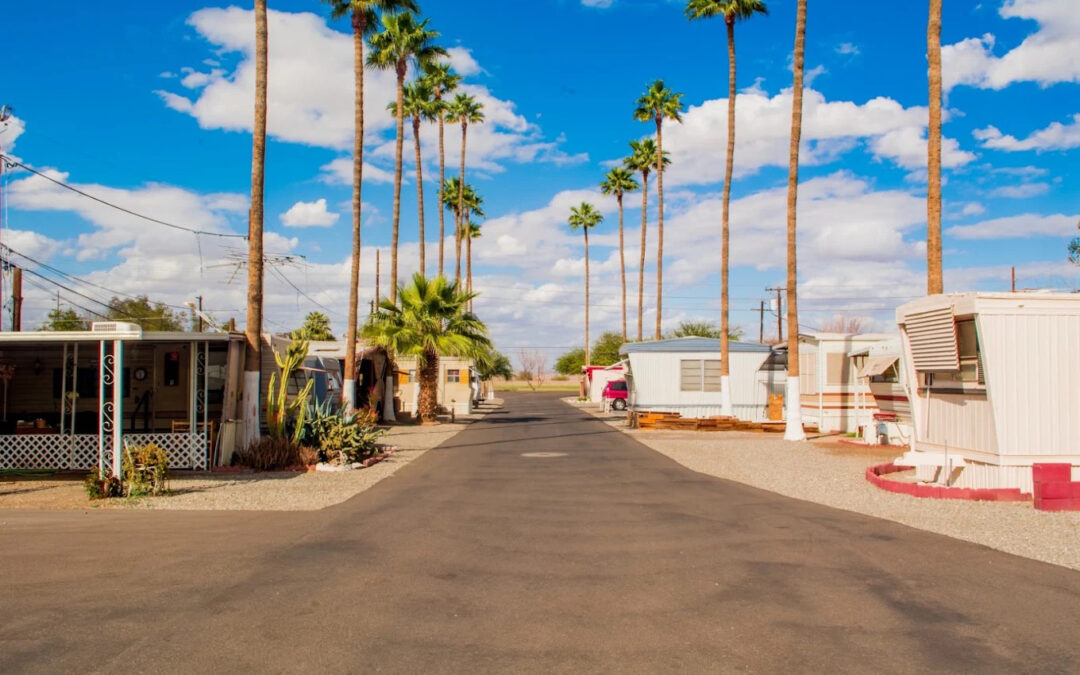
The main difference between Yuma campgrounds and RV parks is how much the place provides and how much your rig has to carry. A private RV park or resort rents you a site and sets its own rules, a developed public campground follows the rules of the agency that runs it, and a Long-Term Visitor Area on public land asks you to arrive largely self-sufficient. Match the type of place to your trip first, then compare stay length, hookups, total cost, rules, season and location.
| If your priority is | Start by comparing | What to confirm |
| A short overnight stop | Private RV parks or developed public campgrounds | Nightly rate, arrival hours, hookups and reservation rules |
| A winter stay of weeks or months | RV parks or Long-Term Visitor Areas | Total season cost, permit or booking terms, utilities and maximum stay |
| More self-sufficient camping | Long-Term Visitor Areas or other public land | Whether camping is allowed, facilities, waste disposal and permits |
| Shared facilities | Parks and campgrounds that list them | Whether restrooms, showers, laundry and hookups are available at your site |
| An age-restricted community | RV parks with written occupancy rules | How the rules apply to residents, partners, children and visitors |
This table is a starting point, not a rule. The right choice depends on the specific site and its rules.
Why Is Choosing a Yuma Campground So Confusing?
Search for Yuma AZ campgrounds and you get long lists, photo galleries and booking sites. Each one shows a name, a price and a few stars. Few of them tell you what kind of place you are looking at.
That matters because “campground” covers very different things. A campground with full hookups offers a different experience from a remote site with few services, and both can appear under the same search.
First-time visitors may not know which facilities they need until they compare the options. Winter visitors should also check seasonal availability, rates and any rules that depend on the length of the stay.
This guide helps you decide which kind of place fits before you pick a name. It is general information, not legal advice, so for a specific stay, talk to an Arizona attorney who handles RV and mobile home park law.
What Kinds of Places Count as Yuma Campgrounds?
Four kinds of places cover most of what you will find. Age limits, such as 55+, are a filter that can apply to a private park, not a separate type.
A private RV park or resort rents sites to RVs. Each one sets its own rates, rules and stay limits, and some limit residency by age.
A developed public campground is run by a city, county, state or federal agency. The agency sets the facilities, reservations, fees and rules.
A Long-Term Visitor Area is a seasonal, permit-based area on public land that the Bureau of Land Management runs. The next section covers what it asks of you.
Dispersed public-land camping means camping outside a developed site. Whether it is allowed, how you get there and what restrictions apply depend on the land, so you must check with the manager of the specific area.
This guide does not rank any campground or quote any price. Rates, availability and rules change, so confirm them with each place before you pay.
Which Kind of Place Fits a First-Timer?
Start with how long you plan to stay and what your rig needs, and let those two answers narrow the field.
A traveler stopping for a few nights needs a set site and a clear nightly price, so a private park or a developed campground fits. A couple spending the winter needs a monthly or season rate and rules they can live with for months, so compare RV parks and Long-Term Visitor Areas on total cost.
A 55+ park may suit you if its written occupancy rules fit your household and travel party. Confirm how the park treats residents, younger partners, children and overnight visitors before booking.
A traveler in a self-contained rig who wants few services can look at public land, if the permit and the rules suit the trip.
If you travel with pets, a large rig or guests, start with the rules. Those limits can remove a place from your list before price does.
What Do Long-Term Visitor Areas Ask of You?
Long-Term Visitor Areas are not all alike, so the details depend on the area. Imperial Dam is one example. Imperial Dam Long-Term Visitor Area sits north of Yuma on the California side of the Colorado River, runs its long-term camping season from September 15 to April 15, and lists restrooms with outdoor showers, trash service and dump sites. That puts it on the California side, which matters for your drive and your plans.
Permits are bought at the Yuma Field Office or on site. The area offers a long-term permit for the whole season and a short-visit permit for 14 consecutive days, and the fees differ by permit and by time of year. Check the page for current terms instead of relying on a price you read elsewhere.
Across the program, the rules lean toward self-sufficiency. In most cases, facilities are minimal and visitors are expected to arrive in a self-contained unit with a permanently affixed wastewater holding tank of at least 10 gallons, and garbage and sewage must be carried to the nearest disposal site. A few areas allow units that are not self-contained, so check the rules for the specific area before you travel.
Those rules cover Long-Term Visitor Areas. Other public land and other public campgrounds have their own rules, so ask the manager of the site you want. If your rig is not self-contained, or you want a restroom and a water hookup, a private park is probably the better match.
How Do You Compare RV Parks on Cost?
A posted rate shows one number. Your real cost is the total of several. Ask each park for the price for your exact dates, because a nightly, weekly, monthly and season rate can include different services.
Ask what the rate covers. Does it include electricity, or is that billed on top? What about water, sewer, trash, laundry and storage? Two parks with the same rate can differ by what they charge on top.
Then ask about the money around the rate. Is the deposit refundable or nonrefundable? What are the cancellation terms? Is there a fee for pets, extra guests or a second vehicle? Get the answers before you pay.
Use the same worksheet for each park, and ask every park for the same dates. The table below is an illustration only, and it uses no real prices.
| Cost item | Park A | Park B |
| Rate for your exact dates | Actual quote | Actual quote |
| Electricity | Included or estimate | Included or estimate |
| Water, sewer and trash | Included or estimate | Included or estimate |
| Deposit and whether it is refundable | Actual quote | Actual quote |
| Cancellation terms | Write them down | Write them down |
| Pet, guest or vehicle fees | Actual quote | Actual quote |
| Storage, if you need it | Actual quote | Actual quote |
| Estimated total for your stay | Add the figures | Add the figures |
Total the whole stay, not one night or one month. Multiply a nightly rate by the number of nights you plan to stay, and compare that figure with the weekly, monthly or season quote for the same dates. The lowest nightly rate is not always the lowest total. If a park cannot give you a figure, mark it unknown, not zero.
How Do You Compare Rules and Who Is Welcome?
Rules decide more of your stay than most photos show, so compare them in writing.
Ask about age limits first. If a park calls itself 55+, ask for its written occupancy and guest rules before you rely on the label. Ask how those rules treat everyone traveling with you, including a visiting family member or a younger partner.
Ask about pets next. Find out how many are allowed, whether any size limit applies and where pets can go. Then ask about your rig. Some parks set limits on length or age, so give the park your rig’s details before you book.
Finally, ask about quiet hours, guests, check-in and check-out times, and the maximum stay. A rule you can live with for a weekend can feel different over a season.
When Should You Go, and When Should You Book?
Yuma has a clear winter season. In a study of the 2017 to 2018 season, RV park winter visitors who stayed 30 days or more in Yuma County most often arrived in October and November and most often left in March and April.
That study is historical and covers one season of RV park visitors, so it does not show what any park offers today or how busy it is now. It does suggest what to ask. When does the park start taking winter bookings? Is a reservation required or advised for your dates? Does the rate change in the busy months?
If you plan to arrive in the busy months, ask early, and get the park’s answer in writing.
When Does a Long Stay Change the Rules?
For a winter visitor, the dates decide it. A stay from December 1 through March 31 lasts about four months, well below 180 days. A stay from October 1 through April 30 lasts more than 180 consecutive days. Count the exact dates for your own stay, including the calendar year, before relying on the threshold.
If your stay could pass 180 consecutive days, ask the park which rules cover your space. A park manager’s answer is useful, but it is not a legal ruling, so if you are unsure, ask an Arizona attorney.
How Do You Check That a Site Will Fit Your Rig?
A site can look fine on a website and still not work for your rig. Give the park your rig’s length, including the tow vehicle if you unhitch, and ask whether the site is a pull-through or a back-in. Mention slide-outs, because they need extra width.
Ask about electrical service next. If you plan to run air conditioning or several appliances at once, ask what electrical service the site offers and whether your rig needs it. Ask about water and sewer connections too, and whether the site is level or needs blocks.
Then ask how the park handles access, such as gate hours and where large rigs turn.
What Should You Confirm Before You Book?
A listed amenity does not always mean it is available at every site or included in the quoted rate. Ask about the exact site you will get, the actual connection type and the dates of your stay.
Ask the park to confirm in writing the site or site type, the rate, what it includes, the deposit and the cancellation terms. Ask when you can check in and when you must check out. Photos may show the site, but a visit can reveal road noise, access and the condition of nearby shared areas, so visit if you can.
What Should You Do When You Arrive?
Check in with your confirmation in hand. Compare the site and its connections with what the park described, and photograph anything that differs, such as the condition of the pad or the hookups.
Read the park rules again and ask about anything unclear before you unpack. Keep your receipts and the written answers you collected. If something does not match what you were told, raise it with the office the same day, in writing, while the details are fresh.
Where Does a 55+ RV and Mobile Home Park Fit In?
Goldwater Estates in Yuma is a 55+ RV and mobile home park. You can send a request through the park’s reservation page, then confirm availability, rates and site details with the office by phone. Check the current rates, site details and pet rules for your dates before you make plans. Compare Goldwater using the same checklist as every other option.
Pros and Cons of Staying in an RV Park
Pros:
- You get a set site and a person to call when something goes wrong
- Rules, rates and deposits can be put in writing before you arrive
- Shared facilities may be available, depending on the park
- It is easier to compare costs when each park gives you a quote
Cons:
- Costs add up over a season, and extras can sit on top of the rate
- Rules can limit pets, guests, rig size and who can stay
- Age limits at some parks may not fit every household
- Busy-season availability may need planning ahead
Conclusion
Picking among Yuma campgrounds and RV parks starts with knowing what kind of place you want. Match your stay length and your rig to the type of place, compare the answers on the same worksheet, and keep them in writing.
To ask about current options at Goldwater Estates, you can call the office at (928) 919-7035. This guide is general information, so have an Arizona attorney review anything that affects a long stay.
Frequently Asked Questions
What does self-contained mean at a Long-Term Visitor Area?
In that program, it means a unit with a permanently affixed wastewater holding tank of at least 10 gallons. Other campgrounds set their own definitions, so ask the manager.
Do Yuma RV parks have age limits?
Some do. Each park sets its own rules, so ask for the written occupancy and guest rules before you book.
How long can I stay at a Yuma RV park?
Each park sets its own maximum stay. If your stay could pass 180 consecutive days, ask which Arizona rules cover your space.
Is public-land camping the same as an RV park?
No. Public-land camping has its own permit and site rules, while a private park sets its own terms. Check the rules for the specific place.
Do I need a reservation?
It depends on the place and your dates. Ask whether one is required or advised, especially if you plan to arrive in the busy months.
Recent Comments