
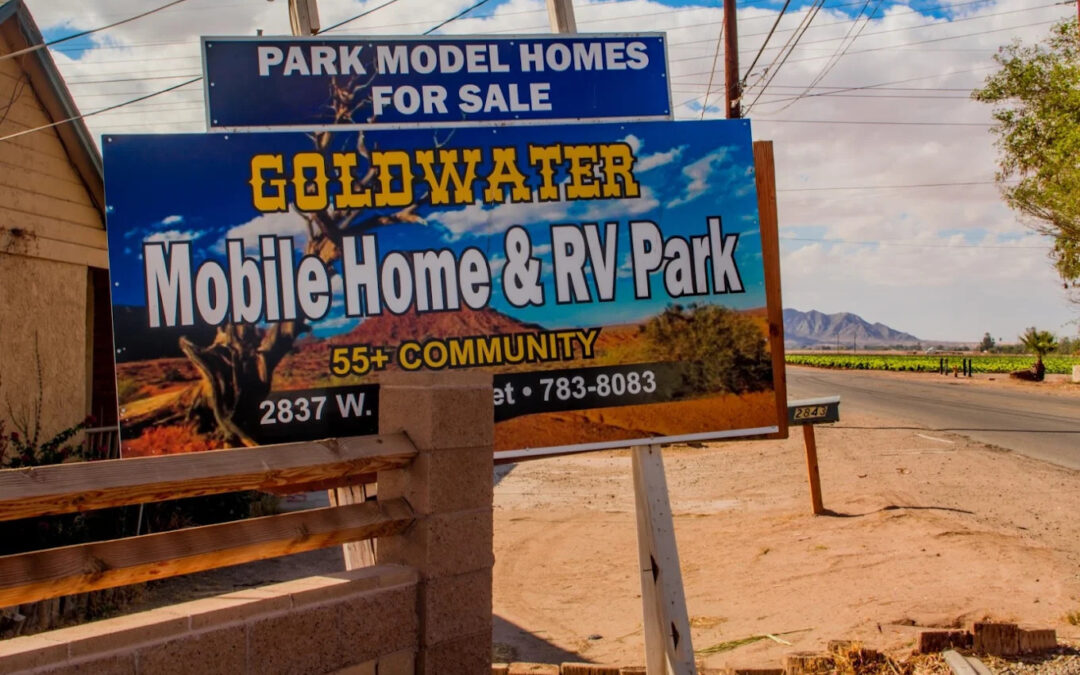
A 55+ RV park is an age-restricted community, but the rules for residents and guests vary by park, and the federal 80 percent figure does not tell you who a particular park will accept. Some parks may require a resident aged 55 or older at every site, while others may have different written policies. Before booking, get the park’s written age and guest policies, the rental agreement and the full costs.
Why Is 55+ RV Park Living Hard to Picture From a Listing?
If you are considering a 55+ RV park, you may have questions about a younger spouse, family visits or everyday community life. A listing rarely answers them, and a search for the topic mostly turns up park pages and personal opinion.
Reviews can help you understand one person’s experience, but they do not replace the park’s written rules. That matters most when you are about to commit savings to a season or a year in a place you cannot fully see from a distance.
The label itself is part of the problem. “55+” is a short phrase that each park applies in its own way, and it sits on top of both federal housing rules and Arizona rental law. Those are different things, and they answer different questions.
This guide separates them. It explains what the label means, who can stay, which rules to check, what daily life can look like and what an agreement should cover. It does not rate or rank any park.
What Does “55+” Mean in an RV Park?
A park that advertises itself as 55+ may have its own age and occupancy rules, and the park sets them. Federal fair housing law also has a specific exemption for housing intended and operated for people aged 55 and older. To qualify for that exemption, a community generally must have at least one resident aged 55 or older in at least 80 percent of its occupied units, publish and follow policies showing it intends to operate as housing for people 55 and older, and verify occupancy with updates at least once every two years.
Whether those rules apply to a particular RV park depends on the facts and on how the property operates. A park can also choose a stricter policy than the federal threshold, such as a resident aged 55 or older at every site.
For a prospective resident, the important point is that the federal threshold does not tell you which guests or family members a particular park will allow. Ask for the park’s written occupancy policy, and use it, not the label, to judge whether the park fits your household. The label also says nothing about activities, noise or neighbors, which is why the rest of this guide focuses on what to check.
Can a Younger Spouse or Family Member Stay?
It depends on the park. Because the federal figure is a minimum, a qualifying community can have some occupied units without a resident aged 55 or older, subject to the applicable requirements. That does not mean any given park will let a younger person stay. Two 55+ parks can answer the same question differently, so check each situation below with the park and keep the answers in writing.
| Situation | What to confirm |
| Younger spouse or partner | Whether the person can live at the site, and what happens if the older resident leaves or dies |
| Children or grandchildren | Whether visits are allowed, the maximum stay length and any registration rules |
| Caregiver or helper | Whether a live-in or overnight caregiver is allowed |
| Adult family or friends | Guest registration, overnight limits and any extra fees |
| Resident aged 55 or older leaves | Whether the remaining resident can continue living at the site |
| Long-term or full-time stay | Minimum and maximum stay, renewal terms and which laws may apply |
Ask how the park distinguishes a visitor from someone who lives at the site. A policy may set different rules for occasional visits, repeated overnight stays and a person who uses the RV as a full-time home. Get the applicable limits in writing instead of assuming a guest policy covers every situation.
Which Rules Should You Check Before Booking?
Rules differ from park to park, and the park’s own written rules are the reliable source. Read them before you pay a deposit. If the park will not provide them, pause and clarify the terms before committing.
Age verification. A community that relies on the federal 55+ exemption must follow the applicable age-verification requirements. Ask the park which documents it accepts, when it collects them and how it protects your personal information. Do not assume every RV park follows the same process.
Quiet hours and noise. Ask when quiet hours start and end and how the park handles complaints. A 55+ label does not guarantee a quiet park, so judge by the written rule and by a visit.
Pets. Ask how many pets are allowed, whether there are size or breed limits, what the leash and cleanup rules are and whether there is a pet fee.
Vehicles and parking. Ask how many vehicles each site may have, where extra vehicles go and whether there are speed limits or limits on what you can park on the site.
Your RV and your site. Ask whether the park limits the age, condition or size of an RV, and what you may add to the site, such as an awning, a shed or decorations.
Changing rules. Ask who can change the rules and how much notice the park gives. A rule that changes after you arrive can change your costs or your plans.
Enforcement. Ask what happens when someone breaks a rule, such as a warning, a fee or a notice to leave, and whether the process is written down. A rule that is enforced unevenly, or not at all, is hard to rely on.
What Is Daily Life Like in a 55+ Park?
Daily life depends on the park, not on the age label. Some parks have a clubhouse and a full calendar of events. Others offer little more than a quiet place to park. Neighbors in the same age group still have different habits and preferences, and the atmosphere depends on the residents, management and activities. A park with an age-based occupancy policy may appeal to you if you prefer an adult-oriented community, but it cannot promise friendly neighbors.
To get a real picture, ask for the current activity calendar and a list of the shared spaces, then ask these questions:
- Are activities included in the rent, or do some require a separate fee?
- Are clubhouse and shared-space hours restricted?
- Are events seasonal, and will the facilities be available during the dates you plan to stay?
- How close are the sites to one another, and which ones are more private?
A visit tells you more than a brochure does. Walk through the park at different times of day, and if the park allows it, talk with a few current residents. Ask them what they wish they had known before they moved in.
The season matters too. In a study of the 2017 to 2018 season, RV park winter visitors who stayed 30 days or more in Yuma County most often arrived in October and November and most often left in March and April. That study covers one past season across the county, so it cannot describe any one park today. A park’s atmosphere and activity calendar may change between its busy season and quieter months, so ask what the park is like in the months you plan to stay.
How Do You Compare Two 55+ Parks Before Committing?
Once you have the answers, put two parks side by side. Mark a line Yes only when the park has given you the answer and, where it matters, put it in writing. This is a practical checklist, not a legal certification or a rating of any park.
| What to compare | Park A | Park B |
| Written age and occupancy rules received | Yes / No | Yes / No |
| Younger spouse or partner policy confirmed | Yes / No | Yes / No |
| Children and overnight guest limits confirmed | Yes / No | Yes / No |
| Total cost for the planned stay confirmed | Yes / No | Yes / No |
| Utility charges and deposit terms clear | Yes / No | Yes / No |
| Activities and shared spaces suit your needs | Yes / No | Yes / No |
| Agreement matches what staff told you | Yes / No | Yes / No |
Leave a line as No until it is confirmed. A park with several No lines is not necessarily a bad park. It means you do not yet know enough to commit, and that is the right time to keep asking.
Where Does a 55+ RV and Mobile Home Park Fit In?
Goldwater Estates is a 55+ RV and mobile home park in Yuma, Arizona, at 2837 W 1st St. It is one local example of why prospective residents should review the rules of the specific park they are considering, not a description of every 55+ park.
Before booking, contact the office to confirm current availability, rates, age and occupancy requirements, guest policies and the documents you will receive before signing. Do not assume another park’s rules will be the same.
What Could Arizona Law Mean for a Long Stay?
Arizona has a separate law for long RV stays, and the length of your stay can decide whether it applies. Arizona’s Recreational Vehicle Long-Term Rental Space Act generally applies when the same tenant rents an RV space in a recreational vehicle park or mobile home park for more than 180 consecutive days under a rental agreement.
A separate provision covers a park model or park trailer in such a park when the same tenant rents the space for more than 180 consecutive days, whether or not a rental agreement is signed, and the Act excludes mobile homes, manufactured homes, factory-built buildings and properties with only one or two RV rental spaces. The law that applies depends on the unit and the rental arrangement.
A stay from December 1 through March 31 lasts about four months, well under 180 days. A stay from October 1 through April 30 lasts more than 180 consecutive days. These examples only illustrate the number of days. They do not establish whether the Act applies to a particular stay, because the answer depends on the unit, the rental arrangement and the facts.
If you plan to live in a mobile home or manufactured home instead of a travel RV, a different set of Arizona rules may apply. Ask the park which rules cover your specific unit and space, and ask about the minimum and maximum stay, any seasonal rate changes and whether the park will hold your site if you leave for a few weeks.
This guide is general information, not legal advice. A park manager’s answer is useful but is not a legal ruling, so if the distinction affects your plans, ask an Arizona attorney who handles RV and mobile home park law.
What Should Your Agreement Cover?
If a promise matters to your decision, ask for it to be included in the agreement or confirmed in writing. Read the agreement before you pay, and ask for a copy you can keep.
For a mobile home park covered by Arizona’s mobile home landlord and tenant law, there is a specific requirement. The landlord must give a statement of policy before the rental agreement is signed and attach it to the agreement, and it must state whether the park is a family community or a housing community for older persons, along with items such as how rent changes are determined.
That requirement is written for mobile home parks. If you rent only an RV space, ask which Arizona rules cover your space, because the long-term RV rental law may be the one that applies to a long stay.
Check that the agreement covers these points:
- The rate, what it includes and when it is due
- The deposit, whether it is refundable and under what conditions
- How utilities are billed and any fees added to the bill
- The length of the stay and any renewal terms
- The park’s age and occupancy rule, and how the park enforces it
- The guest policy
- What happens if you leave early, and what the park does with your deposit
Save a copy of the signed agreement, the park rules and every message about your stay. They are your record if a question comes up later about a charge, a guest or a rule.
Pros and Cons of 55+ RV Park Living
Conditions vary from park to park, so treat these as things to check, not as facts about every park.
Potential advantages:
- A park with an age-based occupancy policy may appeal to people who prefer an adult-oriented community, though the actual atmosphere depends on the residents, management and activities
- Some parks offer shared spaces and organized events, depending on the park
- A written age policy tells you the park’s intent before you arrive
Things to check:
- Younger spouses, children and guests may be restricted, and policies differ by park
- A 55+ label does not guarantee a quiet park or friendly neighbors
- You may need to show proof of age, and the park may ask again later
- Rules on pets, guests and RVs can be stricter than in an all-ages park
- A stay that runs past 180 consecutive days can raise extra legal questions
Conclusion
55+ RV park living means choosing a park that limits residency by age and sets its own rules around that limit. The label tells you about ages. It does not tell you how a park treats younger spouses, how social it is or what the agreement says, and those are the questions that decide whether it fits.
Use the household table and the two-park scorecard to organize your questions, and get the park’s written rules, agreement and full costs before you pay a deposit. If you would like to ask about a 55+ park in Yuma, you can call Goldwater Estates at (928) 919-7035 to confirm current availability and rules. For any stay that could pass 180 days, have an Arizona attorney review your rental terms.
Frequently Asked Questions
Can my younger spouse stay at a 55+ RV park?
It depends on the park’s written occupancy and guest policy. Ask what the policy says about a younger spouse, and what happens if the resident aged 55 or older moves out or passes away.
How do 55+ RV parks check age?
A community that relies on the federal 55+ exemption must follow age-verification requirements. Ask the park which documents it accepts and how it protects your personal information.
Can I live in a 55+ RV park year-round?
Each park sets its own maximum stay. If your stay could pass 180 consecutive days, ask which Arizona rules cover your space, and consider asking an Arizona attorney.
Can my grandchildren visit?
Each park has its own guest policy. Ask how long visitors can stay, whether there are limits for children and whether guests must register at the office.
Are 55+ RV parks quieter?
Not always. The label describes ages, not noise. Check the quiet hours in the park’s rules, and visit at different times of day if you can.
How do I get the rules before I move in?
Ask the park for its written rules and rental agreement before you pay a deposit. For a mobile home park covered by Arizona’s mobile home landlord and tenant law, you should also receive a statement of policy before you sign.
Recent Comments