
Quick Answer
Imperial National Wildlife Refuge is a federal refuge near Yuma set up to protect habitat for migratory birds. Its official page lists no charge to visit, daily lands and trails from dawn to dusk, short gravel trails and no overnight camping. Hours and rules change, so confirm them with the refuge before you drive.
What Is Imperial National Wildlife Refuge?
A national wildlife refuge is land set aside for wildlife, and a visit there feels different from a visit to a city park. There are few buildings and few services, and the main attraction is the landscape and the animals that live in it. That suits some visitors well, and it surprises others who expect the facilities of a park in town.
The refuge was established in 1941 to protect habitat for a variety of migratory birds, and more than 15,000 acres of it is federally designated wilderness. That is a large area. The parts you can reach by road and trail are the parts covered here.
People who spend a winter in Yuma often ask whether the refuge is worth a day. The answer depends on what you like. If you enjoy watching birds, walking short desert trails or sitting by water, it may suit you. If you want a developed park with shade, food and long paved paths, it may not.
Below you will find how to reach the refuge, what it costs, when it is open, what you can do, which rules apply, how to handle the heat and whether it fits a winter RV stay. The details come from the refuge’s own pages as they read when this guide was written, and they change, so check the official pages before you go.
Where Is the Refuge and How Do You Get There From Yuma?
The directions from Yuma are specific. From Yuma, take Highway 95 north and turn west onto Martinez Lake Road between mile markers 46 and 47, continue on Martinez Lake Road for approximately 10 miles, turn north onto Red Cloud Mine Road, then follow the brown signs for three miles to the refuge and visitor center.
The same page lists the address as 12812 N Wildlife Way, Yuma, AZ 85365. Put that address into your own map before you go, and check the route from your park, not from the center of town. This guide gives no drive time, because the time depends on where you start, the traffic and the road conditions.
The route has a long stretch on one road and a final stretch on another, so fill your fuel tank and bring water before you leave, and do not count on finding services along the way. Download or print the directions if you are unsure about your phone signal, since the sources describe no cell coverage. Plan to arrive in daylight, because the refuge’s lands, roads and trails are listed as open daily from dawn to dusk.
Know where you are headed once you arrive. The refuge lists a headquarters office, a visitor center, trailheads and a recreation area at Meers Point, and they are not the same place. The headquarters office and the visitor center have their own hours, and the trails have their own. Check which one you need before you set out.
What Does It Cost and When Is It Open?
The visit page says there is no charge to visit. If you plan something that may carry its own fee or permit, ask the refuge first. The current rules page notes that special use permits are required for some activities.
Hours depend on what you plan to visit. The lands, roads and trails are open daily from dawn to dusk. The visitor center is listed as open from November 1 to March 31, Friday through Sunday, 10 a.m. to 4 p.m., and closed for the season from April 1 to October 31. The headquarters office is listed as open Monday through Thursday from 8 a.m. to 4:30 p.m. and Friday from 8 a.m. to 3:30 p.m. The headquarters office and the visitor center are both listed as closed on all federal holidays.
The refuge’s 2023 brochure lists different visitor center hours than the visit page does. Because the two disagree, trust the current visit page and confirm with the refuge before you plan around the visitor center. If the visitor center matters to your visit, ask the day before you go, and ask whether staff can tell you about trail conditions and recent wildlife sightings.
A closed visitor center does not mean a closed refuge. Still, without it you lose a place to ask questions and a place to start, so plan for that.
What Can You Do at the Refuge?
The visit page lists these activities: birding, boating (motorized and non-motorized), dog walking, fishing, hiking, horseback riding, hunting, painting and drawing, photography, picnicking and wildlife watching. Not every activity is open in every area or season, and some need a license or a permit, so ask the refuge before you plan one.
Dawn and dusk are listed as the best times to see wildlife. If you want to watch birds, plan an early start, which also gives you cooler hours in warm months.
Wetland wildlife is most abundant in winter, when visiting waterfowl arrive, while permanent residents such as great egrets and muskrat are present in summer. Boating is permitted in most areas under special regulations, and water skiing and tubing are not permitted on the refuge. Hunting and fishing are permitted in most areas under state regulations, with hunting limited to the hunt zone. Read the current rules before you plan a boating, fishing or hunting trip.
Which trails are there?
The trails page lists several gravel trails, each rated moderate and open year-round. Meers Point is listed at 0.8 miles and Painted Desert at 1.3 miles. A Desert Garden Trail of 0.85 miles is also listed, described as a one-way trail between the visitor center and the Meers Point Recreation Area, with an observation platform at the trailhead. Meers Point has a comfort station, picnic tables and a boat launch.
The trails page has inconsistencies, including repeated descriptions and a second set of lengths for Meers Point and Painted Desert, so treat the lengths as approximate and confirm them with the refuge. These are short trails that suit a morning visit. Wear sturdy shoes, bring water and a hat, and tell someone which trail you plan to use. If you have trouble with uneven ground or heat, ask the refuge about the trail surface before you go.
Is there a visitor center?
Yes. The visit page describes it as a place where staff and volunteers help you plan your visit and learn about the refuge and its wildlife, and the brochure says it has exhibits, a desert garden and an observation tower. It is open only in the season and on the days listed above, so check before you go. Only service animals are allowed inside, which matters if you bring a dog.
What Are the Rules You Should Know?
The refuge’s current rules page is the place to read the full list. Camping, fires and target shooting are not permitted, drone use is prohibited, and vehicles are allowed only on designated public use roads, with all off-road vehicle travel prohibited.
The same page sets a speed limit of 25 mph on refuge roads and asks visitors to slow to 15 mph where a sign says so. It says vehicle operators must have proof of insurance and a current registration, and that travel into the wilderness is by foot or horseback only. It also prohibits trapping, collecting or disturbing any plant or animal, and removing sand, rock, gravel or minerals.
Do not feed wildlife. The visit page asks visitors not to offer snacks to wildlife, because your lunch could disrupt wild digestive systems or lead to an animal’s death, and to leave apparently abandoned young animals alone, since a parent is probably close by. Take out what you bring in. If a sign at the refuge differs from this guide, follow the sign.
Can You Bring Your Dog?
Yes, with conditions. The rules page says pets must be on a leash unless they are being actively used for lawful hunting, that pets must always be leashed and under control, that owners must clean up after them, and that service animals are welcome. The visitor center admits only service animals, according to the refuge’s brochure.
If you bring a dog, bring water for it. Think about the trail surface and the heat, and ask your veterinarian if you are unsure. Keep the leash on, stay on the trail and pick up after your dog. Do not leave a dog in a vehicle.
How Hot Does It Get and What Should You Bring?
The visit page warns that summer temperatures can be extreme and tells visitors to bring plenty of drinking water. The refuge is not in the center of Yuma, so conditions there may differ from those in town, and town figures are station averages, not a forecast for your dates. They do show the pattern. Yuma’s normal daytime highs for 1991 to 2020 run from about 68 degrees in December to about 80 in March, and then climb to about 94 in May, 103 in June and near 107 in July.
Bring more water than you think you need, along with a hat, sunscreen and comfortable shoes. Carry a charged phone, printed directions and a small first-aid kit, and bring binoculars or a camera if you plan to watch wildlife. Plan the visit for the cooler part of the day, especially from late spring through early fall. If you start to feel dizzy, weak or unwell, stop, rest in the shade and drink water, and get help if you do not recover.
Is the Refuge a Good Fit for a Winter RV Stay?
For many winter visitors it can be a good day trip, because winter, when wetland wildlife is most abundant, overlaps with the visitor center’s listed season of November 1 to March 31. Overnight camping is not permitted, so the refuge is a place to visit during the day and return from, not a place to stay.
A morning at the refuge, a picnic, a short walk and a return to your park in the afternoon can fill a day. Because the visitor center lists Friday through Sunday hours in the season, a weekend suits a visit that includes it. If you prefer quiet, a weekday visit to the trails may suit you better, but confirm the facilities first.
Towing is a separate question. The sources do not say whether the roads and parking suit a towed rig, so ask the refuge before you bring one, and check your vehicle, fuel and water before you go. Plan a flexible day: bring lunch, since the sources describe no food service, carry out your trash and leave time to return before dark. Have a second place to visit in town ready in case a closure or the weather changes your plan.
Where Does a 55+ RV and Mobile Home Park Fit In?
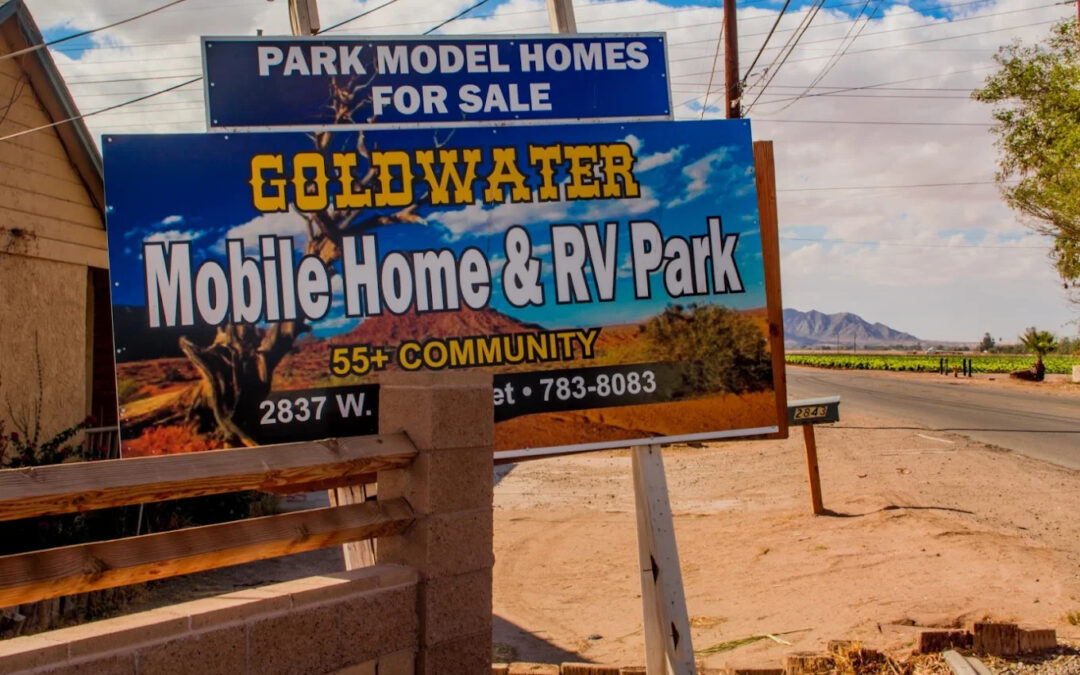
Goldwater Estates is a 55+ RV and mobile home park at 2837 W 1st St on the west side of Yuma. It does not run trips to the refuge, and the distance from the park depends on your route, so measure the drive from the park’s address when you plan your day. If you would like to ask about a winter stay, the office can tell you about current availability and rules.
Pros and Cons of Visiting the Refuge
Conditions change, so treat these as points to check, not guarantees.
Potential advantages:
- The official page lists no charge to visit
- Wetland wildlife is most abundant in winter, when many visitors are in Yuma
- Short trails suit a morning visit
Things to check:
- The visitor center has seasonal days and hours, and sources differ
- Overnight camping and fires are not permitted
- Summer heat can be extreme, and water is essential
- Dogs must be leashed
- The drive includes a long stretch on one road and a final stretch on another
Conclusion
Imperial National Wildlife Refuge is a quiet place with short trails, wildlife and no charge to visit, and it suits visitors who like a simple day outdoors. It is a day trip, not a place to stay, and its hours and rules change, so confirm them before you go.
Look up the address, check your route, bring water and plan around the heat. If you bring a dog, keep it leashed. If you would like to ask about a 55+ park in Yuma, you can call Goldwater Estates at (928) 919-7035 to confirm current availability and rules.
Frequently Asked Questions
Is there an entrance fee at Imperial National Wildlife Refuge?
The visit page says there is no charge to visit. Special use permits are required for some activities, so confirm with the refuge if you plan one.
When is the visitor center open?
The visit page lists it as open November 1 to March 31, Friday through Sunday, from 10 a.m. to 4 p.m., and closed on federal holidays. A 2023 brochure lists different hours, so confirm with the refuge.
Can I camp at the refuge?
No. Camping and fires are not permitted.
Are dogs allowed?
Yes, on a leash and under control, except when actively used for lawful hunting. Service animals are welcome, and only service animals are allowed in the visitor center.
What trails are there?
The trails page lists Meers Point at 0.8 miles, Painted Desert at 1.3 miles and the one-way Desert Garden Trail at 0.85 miles, all gravel and rated moderate. Confirm lengths with the refuge.
When is the best time to see wildlife?
Dawn and dusk are listed as the best times, and wetland wildlife is most abundant in winter.
Recent Comments